Brainerd, MN · Garage Door Service
Off-Track Garage Door Repair for Long Lake Homes
Long Lake homes mostly date to 1987, which means specific roller and track hardware. Here's what an off-track door repair actually involves for this area.
- Repairs & new doors
- Springs & openers
- Serving 8 nearby communities
What the Repair Takes
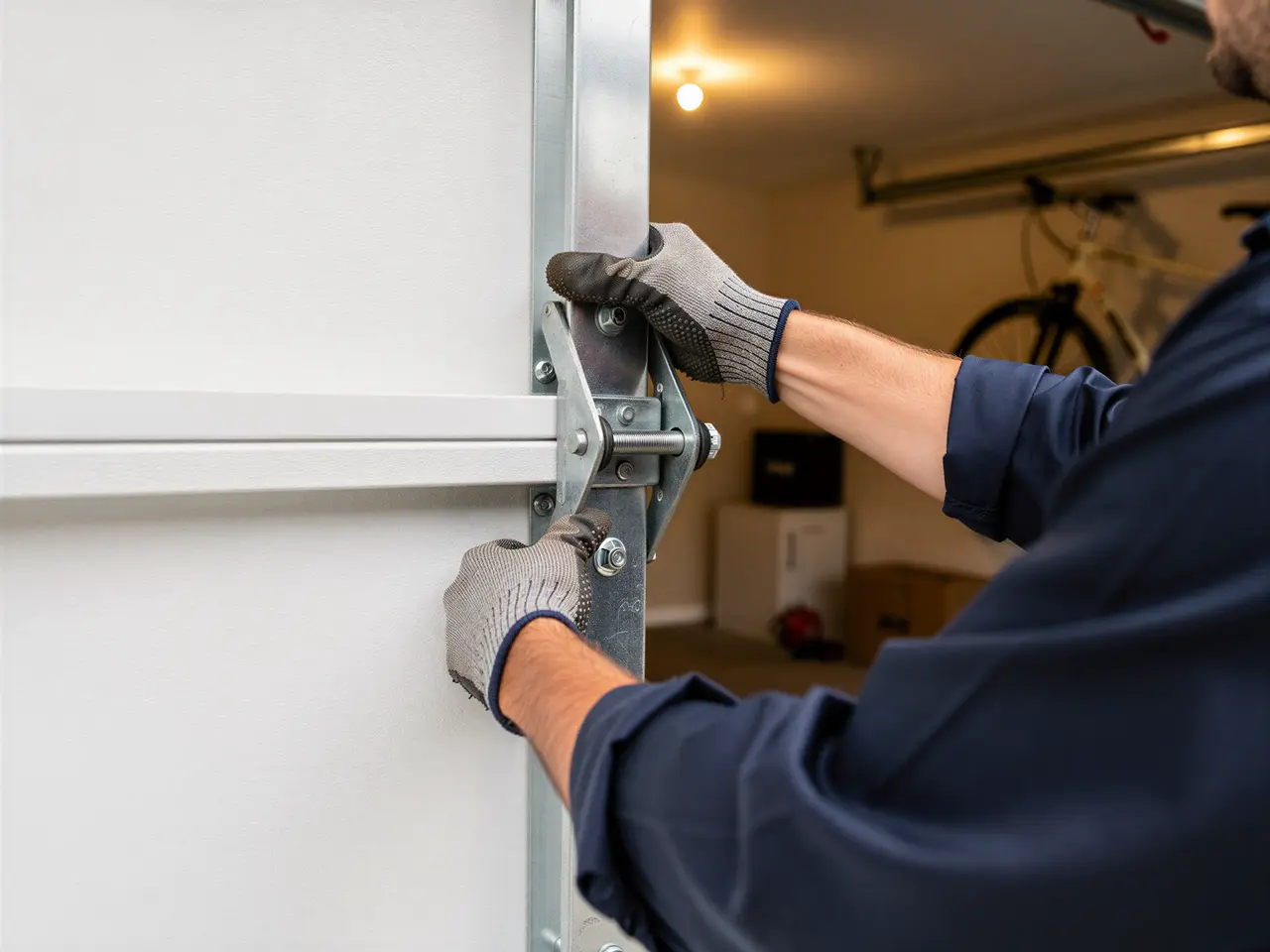
Most of the houses in Long Lake went up around 1987, which puts them squarely in the era of steel sectional doors hung on galvanized steel track with nylon or steel rollers - builder-grade hardware that was standard on new construction through the late 80s and 90s. That matters because an off-track door on a house this age usually isn't a mystery: a roller has worn down or snapped a bracket, the track has pulled away from the jamb where the lag screws loosened over three decades, or a cable jumped the drum and let one side of the door drop out of its channel. Fixing it means re-seating the door panel-by-panel into the track, checking the track for bends or spread where it mounts to the frame, and replacing whatever failed - roller, bracket, or hinge - before putting the door back on its cycle. We don't force a bent door back into a track and call it done. If the track itself is bowed or the bottom section is cracked from the door riding sideways, that gets replaced, not hammered straight. A door that's merely off-track is usually a same-visit fix. A door that's been run off-track repeatedly, with a warped panel or a torn-out bracket, is a different job and we'll tell you that before we start.
How It Shows Up
On a door built to late-80s spec, off-track almost always starts quiet: a roller that's gone a little loose in its bracket, making the door rattle or hesitate a few inches before it fully lifts. Left alone, that play lets the roller walk out of the track lip entirely, usually on one side first, which is why you'll often see a door hanging crooked rather than stuck flat. The other common path is a cable that slips its drum during a cold stretch - the climate here runs cold and severe enough that stiff grease and a slightly undersized cable loop are a bad combination. You'll know it's off-track and not just a spring problem if the door is visibly tilted, if one bottom corner sits lower than the other, or if the door binds hard in one spot but moves fine everywhere else. A spring problem usually makes the whole door feel heavy and even. An off-track problem makes it feel crooked. Don't keep hitting the opener button once you see the tilt - that's how a roller bracket tears clean off the track, which turns a repair into a track replacement.
What It Costs
We don't post a flat number here because off-track repairs split into two very different jobs. A door with a popped roller or a loose bracket, caught early, is a short repair - re-seat the panel, replace the roller, tighten the track hardware. A door that's been run off-track with the opener still pulling, which bends the track or tears a hinge loose, costs more because track sections and hinges get replaced, not just adjusted. Long Lake's 484 households sit inside a broader service area of roughly 9,859 households we cover out of Brainerd, and pricing here follows the same job-by-job logic it does everywhere else in that area - what's actually broken drives the number, not the zip code. We'll look at the door, tell you which of the two jobs you've got, and give you a number before any work starts. If a used roller or bent bracket is doing most of the damage, we say so rather than selling a full track swap nobody needs.
Where This Job Goes Sideways
The way this goes wrong almost every time: someone sees the door hanging crooked, holds the opener button down hoping it'll seat itself, and instead drives the roller further out of the track or tears the bracket off the jamb. On houses from this era, those brackets are lag-bolted into wood framing that's had thirty-plus years to loosen, so they don't take much extra force to pull. The other way it goes sideways is cold. In a climate this harsh, a door that's slightly off-track in October can seize entirely once temperatures drop, because the grease in the roller and the slack in the cable both stiffen up. A job that would've been a quick re-seat in warm weather turns into a frozen door that won't move at all. If you hear a door start to grind, bind, or sound different than normal, stop using it and call rather than cycling it a few more times to see if it clears itself - it usually doesn't.
What Is on the Truck
For a door of this vintage, the truck carries the parts that actually fail on 1980s-to-90s steel sectional doors: nylon and steel rollers in the common sizes, replacement roller brackets, sections of galvanized track, and hinges to match the gauge used on builder-grade doors from that period. We also carry cable and drum hardware, since a slipped cable is as common a cause of off-track as a bad roller. What we don't stock on the truck is a wide range of decorative or custom panel sections - if the door itself is cracked or warped from running off-track, that panel often needs to be ordered, and that's a lead-time item, not a same-visit one. We'll tell you up front if your door falls into that category so you're not waiting on the truck for a part it was never going to carry.
The DIY Question
Re-seating a door that's barely nudged off-track - still mostly in the channel, moving a little rough - is sometimes something a handy homeowner can nurse back into place by hand, with the opener disconnected and the door moved manually. Past that point, it stops being a DIY job. A door under spring tension that's tilted or hanging on one roller can come down fast and hard, and the track itself is sharp-edged galvanized steel that doesn't forgive a slipped grip. If the door is visibly crooked, if a bracket has pulled loose from the frame, or if you can't move the door by hand without real resistance, that's a call, not a weekend project. The honest trade-off: catching this early costs less and takes less time than letting it run until the track bends or a panel cracks, and once it's at that stage no amount of careful DIY work puts it back without replacing parts.
Frequently asked questions
Why does my garage door keep coming off the track in cold weather?
Cold stiffens the grease in the roller bearings and tightens up slack in the cable, so a roller or cable that was barely hanging on in warm weather loses its grip once temperatures drop. On houses from the 1980s and 90s, that hardware has had decades to wear, so the cold is often what finally pushes a marginal roller off the rail.
Is an off-track door always a track replacement?
No. Most off-track calls on homes this age are a popped roller or a loosened bracket, both of which get repaired in place without touching the track. A full track replacement only comes up when the track itself is visibly bent, spread, or pulled away from the frame - usually from the door being forced while off-track.
How far out does the truck come for Long Lake?
Long Lake sits about 6 miles from Brainerd, so it's a short run for the crew. We don't keep a separate branch here - the truck comes out of Brainerd for every call in the area.
Can I keep using the garage door opener if the door looks crooked?
No. Running the opener on a door that's tilted or off one roller is the single most common way a simple repair turns into a track or panel replacement. Disconnect the opener, leave the door where it sits, and call before anything else moves it.
More garage door services in Long Lake
Book garage door service in Brainerd
Call now or request a quote - tell us what the door is doing and where you are.