
Brainerd, MN · Garage Door Service
Is Your Old Garage Door Worth Fixing, or Time to Replace It
Brainerd homes mostly date 1957-1999, median 1986. Here's how door age, steel condition, and our cold winters decide if a repair still makes sense.
- Repairs & new doors
- Springs & openers
- Serving 8 nearby communities
The Common Mistake
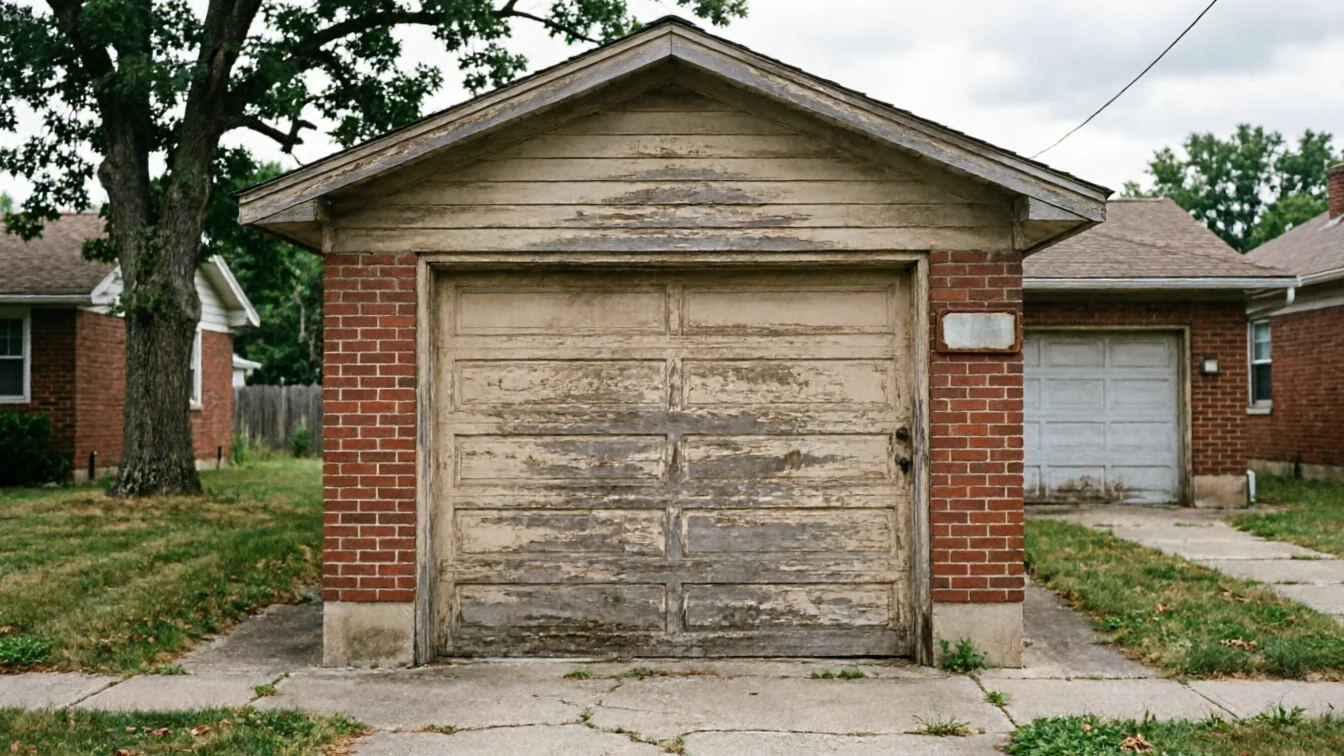
The mistake we see most in Brainerd is treating every garage door problem the same way, whether the door is five years old or thirty-five. A homeowner calls about a noisy opener or a slow-closing door and assumes a new unit is the only answer, or worse, keeps throwing parts at a door that's already past the point where parts matter. With a median build year around 1986 across this area, a lot of doors here are original or close to it. That means steel panels that have gone through close to four decades of hard freezes and spring thaws, and hardware that was never built to the tolerances of a 2024 torsion system. The real question isn't age alone - it's what's failed and whether the rest of the door can still carry the load. A cracked bottom panel on an otherwise sound door is a different job than a door where the track is bowed, the rollers are shot, and the spring is the wrong size for the opener bolted to it. We look at the whole door before we tell you which one you've got.
What Is Going On
Housing stock across this service area - Brainerd out through Baxter, Nisswa, Pequot Lakes, and the rest of the twelve communities we cover - runs mostly 1957 to 1999, with the bulk of it going up in the 1980s and 90s. That generation of garage door was typically a single steel layer, sometimes with a thin foam backer, hung on hardware sized for the house, not for today's heavier insulated panels or quieter belt-drive openers. Thirty-plus years in, the failure points are predictable: the spring has cycled tens of thousands of times and is near the end of its rated life, the rollers are the original steel ones instead of nylon, and the bottom seal has hardened and cracked from repeated freeze cycles. None of that means the door is junk. A steel panel with no rust-through and a square frame can often run another decade once the spring, rollers, and seal are brought up to current standards. What usually ends a door's life here isn't the panel - it's a frame that's racked out of square or a track that's been bent from someone backing into it.
What It Costs
We don't have a flat number to hand you here, because cost depends entirely on what's actually wrong, and that's the point of this section - resist the urge to let a worst-case guess talk you into a full replacement before anyone's looked at the door. A spring swap, a roller set, or a new bottom seal on a structurally sound 1980s or 90s door is a repair bill, not a replacement bill. Replacement makes sense when the frame's out of square, the panels have rusted through at the bottom from years of snowmelt sitting against them, or the door is sized for an opener and insulation standard that's long gone. Given the median household income in this area runs a little over $72,000, most owners we talk to want the repair option exercised fully before they spend on a new door - and on a door that's otherwise sound, that's usually the right call. We'll tell you straight if a repair is throwing good money after bad instead of talking you into the bigger job.
How Local Conditions Play In
This area sits in a severe cold climate band, and that matters more for an older door than almost anything else. A torsion spring loses tension faster in a cold, unheated garage than it would somewhere milder, because steel contracts and the cycle count catches up with it sooner. Nearly 8,000 of the owner-occupied houses across this service area have an attached or detached garage built to that same era's standard, meaning thin panels with little insulation, which means the door itself is working harder against temperature swings than a newer insulated unit would. On a thirty-year-old door, that cold-weather stress tends to show up first in the spring and in the bottom seal - the seal cracks and lets in meltwater and road salt, which is what eventually rusts a panel from the bottom up. If your door is from that original 1980s-90s build and the panel's still solid, a cold-rated spring and a fresh seal can buy real years. If the bottom third of the panel is already rusted through, no spring adjustment fixes that.
Frequently asked questions
How do I know if my garage door spring is original to the house?
If your house was built in the 1980s or 90s and the spring has never been replaced, it's almost certainly original. At that age, in our climate, a torsion spring is well past its rated cycle life even if it hasn't broken yet. We check the coil gauge and date wear patterns when we're out, and most of the time it's due for replacement whether or not it's currently working.
Is it worth insulating an old steel door instead of replacing it?
Sometimes. If the panel is flat, square, and rust-free, adding a foam insulation kit to an older single-layer steel door can help with the cold without the cost of full replacement. It won't match a new insulated door's performance, but on a door that's otherwise sound, it's a reasonable middle step.
When does a repair stop making sense on an older door?
Once the frame has racked out of square, or rust has eaten through the bottom of the panels, you're repairing a door that will keep failing in new spots. At that point the labor on repeated fixes adds up faster than replacing it once, and a new door will hold up better against our winters than patching a thirty-year-old one piece at a time.
Related garage door services in Brainerd
More garage door guides
Book garage door service in Brainerd
Call now or request a quote - tell us what the door is doing and where you are.