
Brainerd, MN · Garage Door Service
Why Brainerd's Older Garage Doors Fight the Cold Harder Than They Should
Garage doors in Brainerd's 1957-1999 housing stock went in before insulation rules existed. Here's what that means for repairs in a cold climate.
- Repairs & new doors
- Springs & openers
- Serving 8 nearby communities
The Common Mistake
The mistake we see most in this part of Minnesota is treating a cold, drafty garage like a minor annoyance instead of what it actually is: a door that predates any insulation requirement. A lot of houses in this service area went up between 1957 and 1999, with the median landing around 1986. Back then, a steel door with a single skin and no foam core was standard, not a downgrade. Owners run space heaters in the garage, caulk the slab, weatherstrip the side door, and never touch the garage door itself, because it still opens and closes fine. It works, so it gets ignored.
The door is usually the single largest gap in the building envelope on these houses, bigger than any window or door combined. Patching around it while leaving the door itself uninsulated is like insulating a house and leaving one wall open. The second mistake stacks on the first: once owners finally notice the cold, they assume the fix is a new opener, when the opener was never the problem. The motor doesn't make a door warmer. The panel does, or doesn't.
What Is Going On
Across Brainerd and the twelve communities we cover - Baxter four miles out, Long Lake at six, East Gull Lake at eight, on out to Nisswa, Ironton, Lake Shore, Pillager, Crosby, Deerwood, Pequot Lakes, Breezy Point, and Motley at nineteen - the housing stock repeats the same pattern: mostly 1980s and 1990s construction. Garage doors from that era were built to a different standard than what's sold today. Most are single-layer steel, sometimes with a thin vinyl backing, no rigid foam, no thermal break at the track.
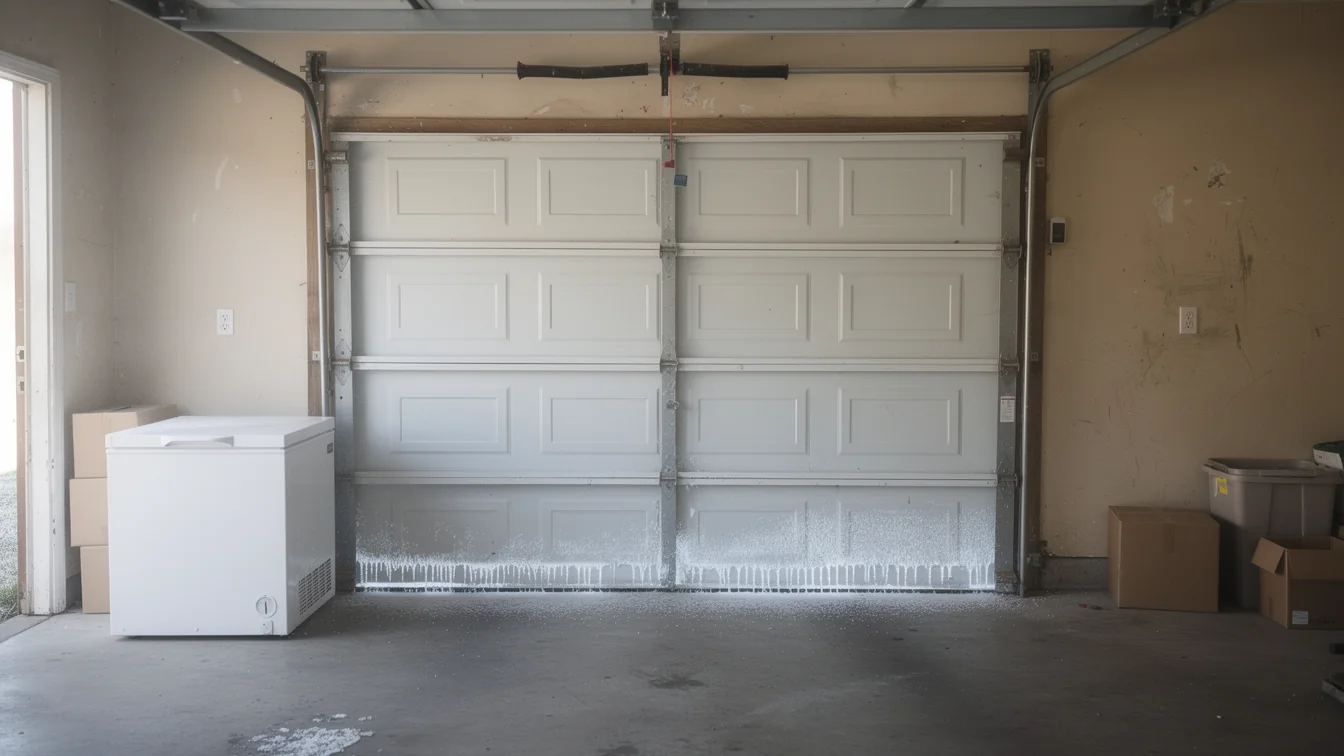
That was fine when energy codes didn't ask for more. It's not fine now that the door sits in a cold-severe climate band and the garage shares a wall with living space, a laundry room, or a finished bonus room above it. The steel skin conducts cold straight through. Condensation forms on the inside face in winter, drips onto the floor, and over a few seasons starts rusting the bottom panel and the track hardware. None of that is a defect. It's just what a 1986 door does in this climate once it's been doing its job for decades.
What It Costs
We can't quote a number here without a job in front of us, and we won't pretend otherwise. What we can tell you is what drives the decision. A door that's structurally sound but cold and drafty is usually a case for weatherstripping, a new bottom seal, and sometimes a retrofit insulation kit between the panel ribs - cheaper than replacement and often enough to stop the worst of the draft. A door with rust through the bottom panel, bent tracks, or hardware that's seized from years of condensation is a different conversation, because patching a door that's already failing structurally doesn't hold up through another cold-severe winter.
Median household income across this service area runs around $72,011, and most owners we talk to want the cheaper fix first, which is reasonable. We'll tell you straight if a seal kit will actually solve your problem or if you're better off putting that money toward a door built to current insulation standards instead of layering a patch onto one that wasn't.
How Local Conditions Play In
Brainerd sits in a cold-severe climate band, and that's the detail that turns an old, uninsulated door from a minor inconvenience into a real problem. A single-skin steel door loses heat fast, and the metal contracts in deep cold, which is part of why owners notice more noise, more resistance, and occasional binding on the coldest mornings of the year. Springs and rollers sized for an average winter work harder when they're cycling in sub-zero temperatures for weeks at a stretch.
The condensation issue compounds it. Warm, moist air from an attached garage or heated workspace hits that cold steel panel and beads up, and over the life of a 1980s or 1990s door that moisture cycle is usually what finishes off the bottom section before anything else does. None of this is unique to one house - it's the pattern we see across the housing stock in this service area, because the doors and the climate haven't changed even where the houses have been updated in every other way.
Frequently asked questions
Is my garage door actually uninsulated, or just old?
If your house was built in the 1957-1999 range common to this area, there's a good chance the original door has a single steel skin with little or no foam core, since insulation wasn't a standard requirement when it was installed. We can tell you for certain by looking at the panel edge and checking for a foam layer.
Will a new opener fix the cold draft in my garage?
No. The opener controls the motor, not the panel's insulation value or the seal around the edges. If the draft is coming from an uninsulated steel door or a worn bottom seal, a new opener won't change that - the fix has to be at the door and the weatherstripping, not the motor.
Should I insulate my old door or replace it?
It depends on condition. If the panels are straight and the hardware is sound, a retrofit insulation kit and new seals often solve the cold problem for less than replacement. If there's rust through the bottom panel or the tracks are bent from years of condensation cycling, insulating a door that's already failing isn't worth it.
Related garage door services in Brainerd
More garage door guides
Book garage door service in Brainerd
Call now or request a quote - tell us what the door is doing and where you are.