
Brainerd, MN · Garage Door Service
When the Power Goes Out, Your Opener Tells on Its Age
How Brainerd's 1960s-90s housing stock and severe cold winters affect garage door openers during power outages, and what actually needs fixing versus replacing.
- Repairs & new doors
- Springs & openers
- Serving 8 nearby communities
The Common Mistake
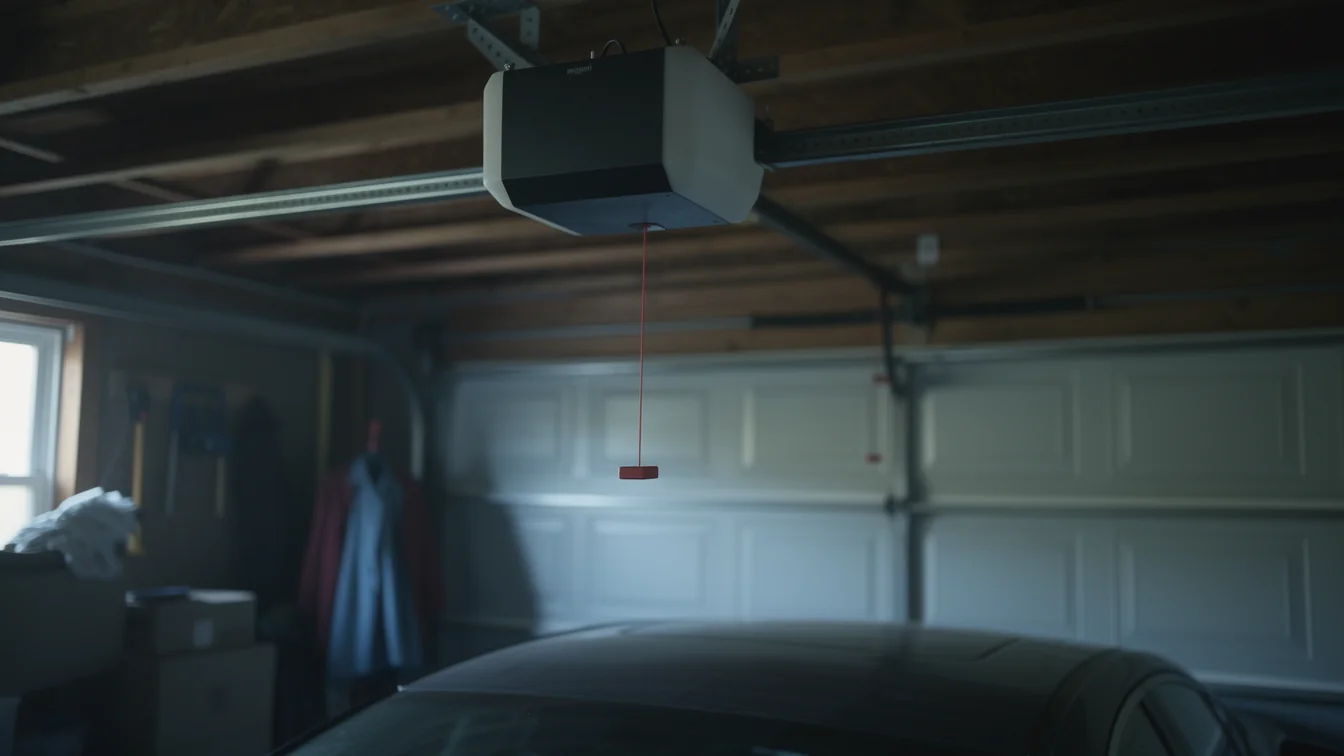
The mistake we see most is someone standing in the driveway during a power outage, yanking on the red release cord for the first time in years, surprised it's stiff or won't budge. Most of the housing stock around here went up between 1957 and 1999, with the median sitting around 1986 - which means a lot of openers are original chain-drive units installed well before battery backup was standard equipment on residential openers. Owners assume the opener will "just work" on battery when the power drops. On a unit from the 1980s or 90s, there often isn't a battery at all - the motor is dead the instant the house goes dark, full stop. The second mistake follows the first: people force the manual release without knowing which way the trolley needs to travel, and bend the arm or crack the plastic carrier. That's a bigger job than the outage ever was. If you don't know where your release cord is or when it was last pulled, that's the first thing worth checking, not during a storm, but now.
What Is Going On
A garage door opener and the door itself are separate systems. The spring and cable system does the heavy lifting; the opener just drives the trolley that pulls the door along the track. When the power outages, the motor stops, but the door itself isn't stuck - it's disconnected from the opener once you pull the manual release, and from there it should move by hand on its springs like it did before the opener was ever added. On original 1980s and 90s chain-drive units, that release mechanism hasn't needed to work in years, and dust, humidity, and cold all stiffen the parts that hold it. Across the 12 or so areas this company works in, the housing stock runs close in age, so this isn't a one-house problem - it's an era-of-construction problem. Newer belt-drive openers with battery backup sidestep most of this, because the door keeps cycling on its own for a limited number of openings even with no grid power. But if your opener predates that feature, the outage reveals a maintenance gap that was already there, not a new failure caused by the power outage itself.
What It Costs
We can't quote a number here without a specific unit and door in front of us, so we won't guess. What we can tell you is what drives the cost conversation: whether the opener itself is original 1980s/90s stock (often the cheaper fix is a newer unit with backup power built in, rather than chasing parts for a motor that old) or a newer opener that simply needs its backup battery replaced, which is a smaller job. Across the service area, with a median household income around $72,011 and roughly 7,889 owner-occupied houses, most owners are weighing a repair against a full opener swap at some point in a door's life - and an opener outliving its battery backup life is usually the tipping point. One honest limit: we don't stock every battery pack for every discontinued opener model, so sometimes replacement is the faster and more sensible path even if the motor itself still runs fine.
How Local Conditions Play In
This area sits in a severe cold climate band, and that matters more for openers than people expect. Cold doesn't just slow motors down - it stiffens chain and belt tension, thickens old grease on the trolley rail, and makes manual-release springs harder to pull right when you need them most, during a January outage. A door that releases smoothly in August can bind in February on the exact same hardware. Combine that with housing built mostly in the 1957-1999 range, median 1986, and you've got a lot of openers reaching the point where both the motor and the backup battery (if there is one) are past reliable service life at the same time winter is hardest on them. We see this pattern repeat across the area regardless of which of the dozen or so local communities a house sits in - it's an age-of-equipment and climate combination, not a one-off. If your opener is original to a house from that build era, don't wait for an outage to find out whether the manual release still works.
Frequently asked questions
Will my garage door opener work at all during a power outage?
Depends on the unit. If it's an original chain-drive opener from the 1980s or 90s, which a lot of homes here still have, there's likely no battery backup - the motor stops dead when the power does. Newer belt-drive openers with built-in battery backup will keep working for a limited number of cycles. Check your opener's manual or look for a battery pack near the motor housing to know which one you have.
Can I open my garage door by hand during an outage?
Yes, once you pull the manual release cord (usually a red cord hanging from the trolley), the door disconnects from the opener and moves on its springs, same as before the opener was added. On older units, that release can be stiff from disuse, especially in cold weather, so it's worth testing it once a year rather than finding out during a storm.
Should I replace an old opener or just add a battery backup?
If the opener is original to a house built in the 1980s or 90s, a standalone battery pack often isn't compatible or available anymore. At that point, replacing the opener with a newer unit that has backup power built in usually makes more sense than chasing parts for a discontinued motor.
Related garage door services in Brainerd
More garage door guides
Book garage door service in Brainerd
Call now or request a quote - tell us what the door is doing and where you are.