
Brainerd, MN · Garage Door Service
What That Grinding, Popping, or Squealing Sound Is Telling You
Brainerd homes built between 1957 and 1999 develop specific door noises as original hardware ages through decades of severe cold, and what each sound means.
- Repairs & new doors
- Springs & openers
- Serving 8 nearby communities
The Common Mistake
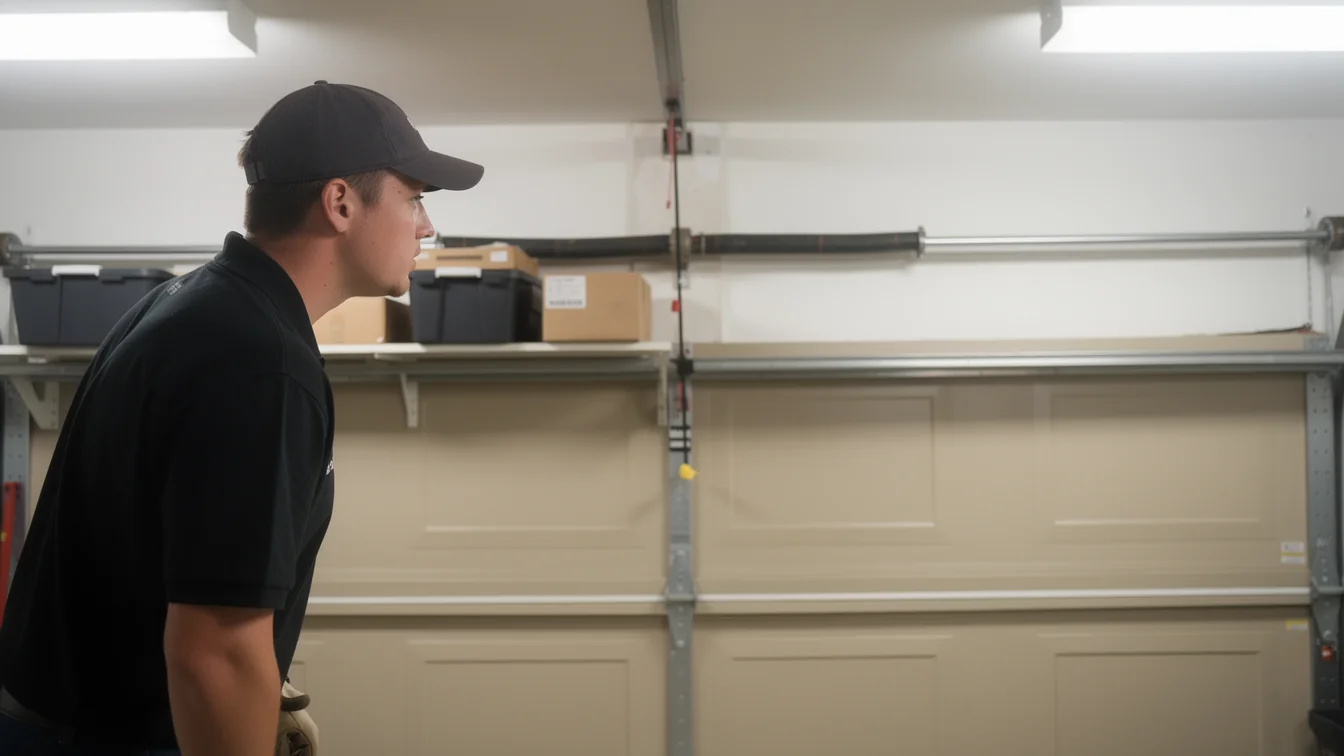
Most people hear a new noise from the garage door and reach for a can of spray lubricant, spray the hinges, and call it handled. Sometimes that's fine. More often it isn't, because the noise isn't a lubrication problem - it's an age problem. A lot of Brainerd houses were built between 1957 and 1999, with the biggest run going up around 1986, and that means a lot of original torsion springs, original rollers, and original track hardware still doing the job forty-plus years later. Oil on a worn roller bearing doesn't fix the bearing. It just buys you a few quieter weeks before the sound comes back, usually louder. We'll say the honest thing here: we can't tell you exactly what's wrong from a description over the phone. A grinding sound could be a dry bearing or a spring about to let go, and those are very different jobs. If the door is making a new sound, the mistake isn't ignoring it - it's assuming WD-40 is the whole answer before anyone's actually looked at the hardware.
What Is Going On
Different sounds point to different parts, and in this area the parts in question are usually original to a house from the 1957-1999 window - across the twelve communities we cover, from Baxter and Nisswa out to Crosby and Deerwood, most garages still have their 1980s or 90s hardware. A rhythmic thump as the door moves usually means a flat spot on a roller, common once steel or nylon rollers pass the few-thousand-cycle mark. A sharp metallic pop, especially on a cold morning, is often a torsion spring losing tension or a cable starting to fray on the drum. A low grinding hum that gets worse as the door opens points to the opener's drive gear, which wears down steadily over decades of use and doesn't get quieter on its own. A rattle along the horizontal track is frequently loose carriage bolts, which work themselves out as the track expands and contracts with the season. None of these get better by waiting.
What It Costs
We're not going to put a number here that isn't honest, because the real cost depends on which part failed and whether the rest of the hardware is original 1980s stock or has already been partly replaced. A worn roller swap is a small job. A broken torsion spring on a door that's never had the hardware touched since it was built is a bigger one, because once you're in there you're often finding a second worn part that was masking the first. What we can tell you is the question that actually matters before you spend anything: is this door's hardware original to the house, or has some of it already been updated? That one fact changes the job more than the noise itself does. If a door is still running on its 1986-era springs and opener gearing, replacing the worn part in isolation sometimes just buys a short reprieve before the next part next to it fails.
How Local Conditions Play In
Brainerd sits in a climate band classified as severe cold, and that matters more for garage hardware than people expect. Steel contracts in cold weather, which tightens torsion springs and track bolts through more freeze-thaw cycling each winter than a door in a milder region ever sees. Nylon rollers, common on houses built through the 1980s and 90s across this service area, get brittle and crack faster in sustained cold than they would in a warmer climate - that cracking is often the source of a clicking sound that wasn't there in summer. A house built in 1986 on this side of the lake is now pushing forty years on its original hardware, and that hardware has spent four decades of winters doing exactly this kind of cold-cycling. Distance matters too when a part has to come from the shop rather than the truck - Baxter sits four miles out, Nisswa eleven, Crosby fifteen - so a noise reported early, before a spring actually lets go, is easier to get ahead of than one that turns into a no-go on a subzero morning.
Frequently asked questions
My door makes a loud pop once in a while but still opens fine - is that urgent?
That pop is very often a torsion spring starting to lose tension, especially on an older door in this area. It can still open fine right up until the spring breaks outright, usually without warning. It's not a same-day emergency if the door still works, but it's not something to leave for a season either.
Why is the noise worse in winter than summer?
Cold tightens steel and makes nylon parts brittle, and Brainerd's winters are classified as severe cold, so hardware here goes through more stress each season than it would in a milder climate. A roller or bearing that's marginal in July can start grinding or cracking once temperatures drop.
Can I just lubricate the noisy part myself?
You can, and it sometimes helps for a short while on a hinge or track that's simply dry. But if the sound is from a worn roller, a loosening spring, or a failing opener gear, lubrication won't fix the underlying wear - it just delays finding out what's actually happening.
Related garage door services in Brainerd
More garage door guides
Book garage door service in Brainerd
Call now or request a quote - tell us what the door is doing and where you are.