Brainerd, MN · Garage Door Service
Garage Door Maintenance for Crosby's 1960s Housing Stock
Crosby homes mostly went up in the mid-1960s, which means steel doors on extension springs built before torsion hardware was standard. Here's what a tune-up catches.
- Repairs & new doors
- Springs & openers
- Serving 8 nearby communities
Getting It Booked In
Crosby sits about 15 miles out from our shop in Brainerd, so a maintenance visit here gets scheduled as a run, not a drop-in. That's not a complaint about the town, it's just how the route works - we're not sitting on a side street in Crosby waiting on calls, we're coming from Brainerd with a truck that's already stocked for the kind of hardware this neighborhood tends to have. When you call, tell us the door's age if you know it, or just the approximate year the house was built. With roughly 1,167 households in the Crosby area, we're not guessing at what's common here - most of what we see traces back to houses built around 1965, and that one number tells us a lot about what to bring before we ever see the door.
We'll ask a few questions up front: does the door bind at any point in the travel, is there a grinding noise, has the opener started reversing on its own. That lets us load the right springs and rollers instead of making a second trip.
See our Crosby page for the general service area, and our Brainerd maintenance page if you're closer to town and want the fuller service rundown.
What Is on the Truck
A house built around 1965 almost never has torsion spring hardware as original equipment - that style didn't become the standard until later. What we expect to find instead is a single steel panel door hung on extension springs, with a safety cable run through the spring (if one was ever added at all) and hardware that's seen close to sixty years of a cold climate cycling it open and shut. So the truck carries extension spring sets in multiple sizes, safety cables, and the sheet-metal hinges and rollers that style of door uses - not the torsion drums and cables that a newer install around here would need.
We also bring weatherstrip and bottom seal stock, because a door frame from the 1960s was built to a looser tolerance than anything going up today, and a severe cold climate works that gap hard every winter. If your door was replaced more recently with a newer torsion-spring unit, we carry that hardware too - we just don't assume it until we've looked at the opener and the spring configuration ourselves.
What It Costs
We don't have a flat number to print here, and we're not going to make one up. What a maintenance visit runs depends on what's on the door when we get there - a 1960s extension-spring door with original hardware takes different parts and different labor than a door that was swapped out ten years ago. What we can tell you is that households in this part of the service area run a median income noticeably lower than some of the surrounding towns we cover, and we price maintenance calls the same way regardless of which town they're in - the job dictates the cost, not the zip code.
If you want a number before we show up, ask for it on the phone. We'll ask what year the door and opener are from and give you a realistic range, not a guess that falls apart once we're standing in front of the track.
The DIY Question
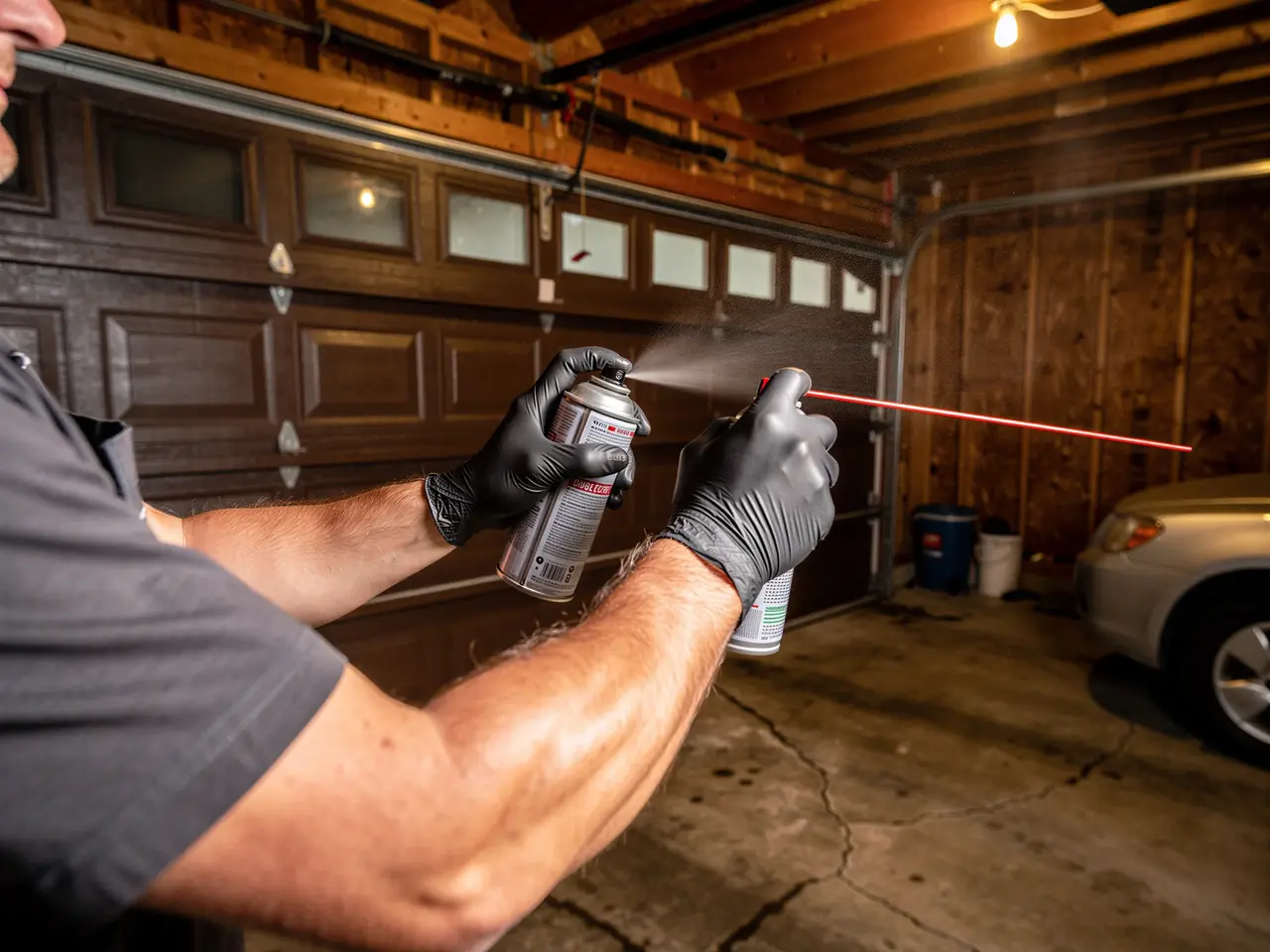
Lubricating rollers and hinges twice a year is a reasonable homeowner job, and we'd rather you did it than not. What's not a DIY job on a Crosby-era door is touching the extension springs. These were built under tension without the safety cable systems that became common later, and on a door that's been in place since the 1960s, the steel in that spring has fatigued in ways you can't see from the garage floor.
In a cold climate with a severe winter swing, metal contracts and expands more than owners expect, and that's exactly the stress that finds a weak spring. We'll check the cable, the spring coils, and the anchor points as part of a maintenance visit - that's the part worth paying for even if you handle the lubrication yourself.
How It Shows Up
On a door this old, trouble rarely announces itself as a dead opener. It shows up as a door that's gotten noticeably heavier to lift by hand, a scraping sound low on the track where rust has pitted the rail, or a door that sags slightly at one corner when it's down. Those are signs of extension springs losing tension unevenly, not an opener problem, even though an opener straining against weak springs is often what finally burns out the motor.
We also see a lot of hardware that's simply outlived its finish - galvanized coating worn through on rollers and hinges, which in a severe cold climate turns into surface rust fast once the protective layer is gone. None of that means the door needs replacing. It usually means the moving parts need replacing while the panel itself is fine.
Where This Job Goes Sideways
The honest limitation here: once an extension spring from a 1960s-era install has rusted through its coils, we can't just oil it and call it maintenance. That's a repair, and we'll tell you so rather than charge you for a tune-up that won't hold. The same goes for track that's bent from decades of a door being forced past a binding point - straightening it is a stopgap, not a fix.
Where owners get burned is skipping maintenance for years because the door still opens, then calling only when a cable snaps under load. On an extension-spring door without a safety cable retrofit, that's a sudden, heavy failure, not a slow one. If your Crosby house still has its original door hardware, that's the one thing worth checking before winter, not after.
Frequently asked questions
How often should a door built in the 1960s get serviced?
We'd check it at least once a year, ideally before the cold months set in. Original 1960s hardware - extension springs, steel rollers, sheet-metal hinges - has had decades to wear, and a severe winter climate accelerates whatever fatigue is already there. A once-a-year visit catches rust and spring wear before it becomes a stuck or falling door.
Does Brainerd Garage Door Pros have a location in Crosby?
No, we run out of Brainerd and travel to Crosby, which is about 15 miles out. We still stock the truck for what's common on Crosby's older housing stock - mainly extension-spring doors - before we head out, so the visit isn't slowed down by a parts run.
My door still has the original hardware from when the house was built - is that a problem?
Not automatically, but it's worth a look. Extension springs don't carry an expiration date, but after close to sixty years of cycling through cold winters, the coils fatigue unevenly. We check tension, rust, and whether a safety cable is even present, since many original installs from that era didn't include one.
Book garage door service in Brainerd
Call now or request a quote - tell us what the door is doing and where you are.